Home Services
Locations AlamoBrentwoodConcordDanvilleLafayetteMartinezNewarkOrindaPittsburgPleasant HillSan Ramon
About Reviews Contact (925) 503-1377

Roofing in Martinez, CA

Martinez sits where the Delta meets the Carquinez Strait, and that geography shapes every roof here.

Licensed & Bonded and fully insured
Written Estimates
Local to Martinez
Workmanship Warranty

Martinez sits where the Delta meets the Carquinez Strait, and that geography shapes every roof here. Cool foggy mornings roll in off the water.

Hot dry summers bake the shingles by afternoon. Then the Delta kicks up strong wind events that test every fastener and ridge cap on the block.

Housing stock tells you what you're dealing with. Downtown Martinez and Vine Hill are full of Craftsman bungalows from the early 1900s.

Those low-pitch roofs, deep eaves, and exposed rafter tails need careful flashing work.

Mid-century ranch homes in Pacheco Verde and Hidden Lakes came in the 1950s and 60s.

Newer tract homes in Alhambra Valley and Franklin Canyon date to the 1990s and 2000s. Each era fails differently. Here's what a roofer actually finds:

  • Original bungalows with failing felt underlayment and dry-rotted fascia at the eave
  • Ranch homes with worn three-tab shingle and cracked pipe boots
  • Tract homes with lifted ridge caps after a wind event
  • Any roof over 20 years old with granule loss and exposed asphalt

Heat is the quiet killer. Repeated thermal cycling cracks sealant at valleys and chimney flashing. Wind then finds those gaps.

Fog adds moisture to north-facing slopes that never fully dry. A roof inspection after a windy spring is worth the call.

1

What Roofing Work in Martinez Includes

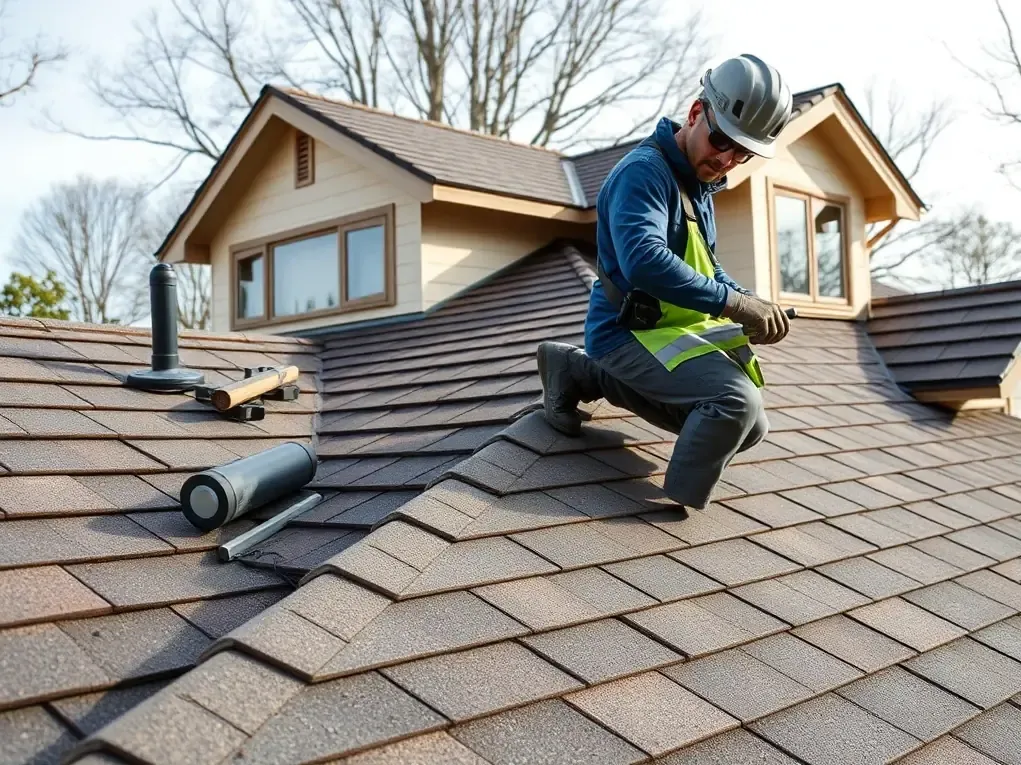
Scope starts with a roof inspection, not a sales pitch. A roofer walks the rooftop, checks the attic from below, and photographs problem areas.

From there a roof estimate breaks out tear-off, materials, and labor line by line.

Tear-off means prying old shingle and roofing felt loose with a pry bar and roofing shovel. Debris goes straight into a dumpster.

Crews check the roof deck for soft plywood or osb and replace bad sheathing before anything new goes down.

Material choice depends on pitch and structure.

Low-slope sections over a porch canopy or mansard often take a membrane — tpo, epdm, or pvc membrane — rather than shingle.

Steep fields take asphalt shingle, architectural shingle, or a standing-seam panel where the budget allows.

Installation follows a real sequence:

Tools you'll see on site: a nail gun fed by an air compressor, a roofing square for layout, and sealant at penetrations.

Crews set scaffold or ladders safely and protect landscaping.

Cleanup is part of the job. A magnetic sweep catches stray nails. Gutters and downspouts get cleared of debris.

The attic gets a final look to confirm ventilation and insulation weren't disturbed.

  • Synthetic underlayment or tar paper over the deck
  • Ice-and-water shield at valleys and eaves
  • Drip edge along the rake and eave
  • Step flashing and counter-flashing at walls
  • Ridge vent and ridge cap to close the top

2

Quality & Materials Standards

Good roofing in Martinez starts with the substrate. A sound roof deck, correct decking thickness, and proper fasteners matter more than brand names.

Every nail or screw should hit framing, not just sheathing.

Wind deserves special attention here. Delta gusts lift poorly anchored material. Quality work means:

Water management is the other half. Correct flashing at the chimney, skylight, and dormer prevents the leaks that heat and wind eventually expose.

Apron flashing, valley metal, and a continuous vapor barrier under the field keep water moving to the gutter, not into the attic.

Ventilation and waterproofing work together. A ridge vent paired with soffit vent keeps the attic cool. An attic fan helps in the hottest weeks.

Balanced intake and exhaust protects insulation from condensation damage.

Some details only matter on certain homes. A parapet wall needs coping and a scupper for drainage.

A gambrel or mansard profile needs careful flashing at every transition. Porch awnings and a canopy over an entry need their own weatherproofing.

Code and honesty go together. Contra Costa building code sets minimum standards, and a permit is required for most full replacements.

A reputable roofing contractor documents conditions with photos before recommending work. Insurance claims should reflect actual damage, not inflated scope.

Small materials still matter. Mastic and roof cement seal minor joints. Caulk and adhesive secure trim.

A snow guard is rarely needed here, but a torch-applied modified bitumen detail sometimes is. Quality is the sum of these choices.

  • Six-nail patterns on shingle fields
  • Wind-rated ridge cap and hip details
  • Sealed pipe flashing and boot flashing at every penetration
  • Proper anchor points for anything mounted on the roof
3

Seasonal and Storm Exposure in Martinez

Summer heat bakes Martinez rooftops from June through September. Delta breezes follow in the afternoon, so surface temps swing hard between noon and dusk.

That cycling works on asphalt shingle tabs and sealant strips until edges curl. Architectural shingle fields age faster on south-facing slopes.

Cool, foggy mornings roll in off the Carquinez Strait. Moisture settles on wood shake, cedar shake, and older tile, then evaporates by mid-morning.

Repeat that daily and you get creeping rot at the eave and fascia. Painted fascia blisters; shake splits along the grain.

Then come the Delta wind events. Gusts lift loose shingle tabs, pry at ridge cap, and work fasteners in the roof deck.

A missing ridge vent or torn pipe boot shows up fast after one of these blows. Check the roofline from the street afterward.

Timing follows the pattern. Book a roof inspection in early spring, before heat stress peaks.

Schedule a second look in late fall, after the windy stretch and before winter rain.

  • Spring: inspect flashing, valleys, and sealant before summer heat.
  • Late summer: look for curled shingle, lifted ridge cap, cracked caulk.
  • Fall: check drip edge, gutters, and downspouts after wind events.
  • Winter: watch for ponding near low-slope sections and clogged scuppers.
4

Local Service Areas

Downtown Martinez

Historic downtown sits near sea level, close to the Carquinez Strait. Fog and salt air are constant companions for these old rooftops.

Hidden Lakes

This pocket of mid-century ranch homes dates to the 1950s and 60s. Low-slope sections and shallow pitch roofs are common here.

Vine Hill

Vine Hill mixes older homes with newer infill on gentle rises. Sun exposure is strong on the western slopes.

Pacheco Verde

Newer suburban tract homes from the 1990s and 2000s define this area. Builder-grade materials are now reaching end of life.

Alhambra Valley

Rural, wooded lots and larger parcels set Alhambra Valley apart. Tree cover and debris are the big stressors.

Franklin Canyon

This corridor runs toward the hills with varied, older housing stock. Wind exposure climbs as you gain elevation.

  • Craftsman bungalows from the early 1900s carry original wood shake and cedar shake.
  • Failing shake shows as split, cupped shingles and soft spots at the eave.
  • Old tar and gravel built-up roof sections near commercial storefronts need patching.
  • Corroded step flashing at chimneys lets water track down into the attic.
  • Three-tab shingle fields on shallow slopes take on water at the valley.
  • Aging tar paper underlayment has often given out under the shingle.
  • Modified bitumen and membrane patches near additions show cracked seams.
  • Worn pipe boot and vent boot collars leak at plumbing stacks.
  • Mid-century ranch roofs often hide tired felt and worn decking underfoot.
  • Newer tract homes from the 1990s use architectural shingle that curls at the rake.
  • Gutter and downspout failures stain the fascia along the overhang.
  • Sun-baked sealant around skylights cracks and needs fresh caulk.
  • Original three-tab shingle is thinning and losing granules on sunny faces.
  • Synthetic underlayment under aging shingle may be brittle at this point.
  • Ridge vent and soffit vent systems need clearing to keep attic airflow.
  • Loose fasteners and popped nails show after strong Delta wind.
  • Shade keeps moss and moisture on wood shake and cedar shake longer.
  • Fallen leaves clog gutters and back up water at the eave.
  • Deep valleys trap debris that rots roofing felt and underlayment.
  • Tree limbs and overhanging canopy scrape shingle and abrade the surface.
  • Mixed-age homes show everything from slate and tile to metal panel.
  • Standing-seam panel seams and fasteners loosen under gusting wind.
  • Clay tile and concrete tile crack and slip after freeze-thaw swings.
  • Exposed gable and verge edges take the brunt of wind-driven rain.

What We Do in Martinez

Full-service roofing for Martinez homeowners:

Explore Nearby Communities

Roofing work across Martinez and the surrounding area.

Questions about a specific street, roof type or shared-wall detail? Call (925) 503-1377 and describe the property.

Roofing in Martinez?

Roofing Reference Images in Martinez

Roofing work in Martinez, CA — photo 1 Roofing work in Martinez, CA — photo 2 Roofing work in Martinez, CA — photo 3